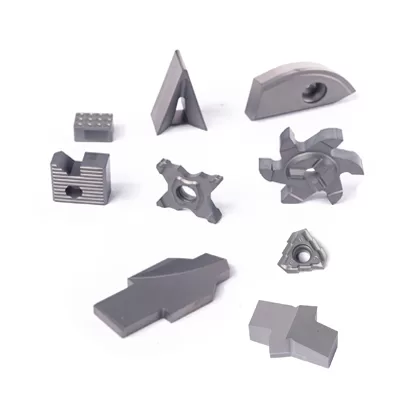
Behind every indexable turning insert, milling cutter and drilling tip lies a precisely engineered starting point: the carbide insert blank. Long before a tool brand grinds, coats and laser-marks its finished inserts, the performance ceiling has already been set by the blank — its grade, density, geometry and dimensional consistency. As machining demand grows across automotive, aerospace, die and mold, and general engineering, more cutting tool manufacturers are re-examining where their blanks come from and what goes into them.
In this article, we explain what a tungsten carbide insert blank is, why cemented carbide remains the material of choice for indexable cutting tools, and how to specify the right blank for your product line.
What Is a Carbide Insert Blank?
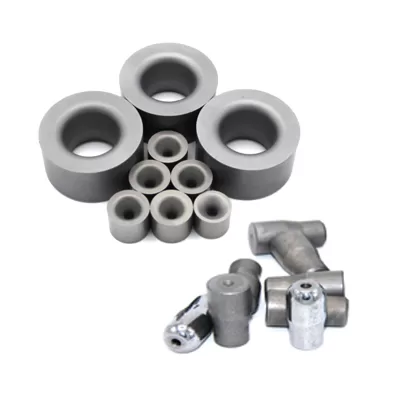
A carbide insert blank is a sintered, near-net-shaped piece of cemented carbide produced in the standardized geometries of indexable cutting tools — triangular, square, diamond (55° and 80°), round, parallelogram and trilateral — with or without a pressed center fixing hole. It is supplied either as-sintered or with the periphery ground, ready for the tool manufacturer’s edge preparation, coating and marking operations.
Compared with cutting inserts from oversized plate or rod stock, starting from dedicated carbide insert blanks offers three measurable advantages:
- Material efficiency: Near-net shapes can remove up to 90% less grinding stock than machining from block — a decisive saving as tungsten raw material costs keep climbing.
- Consistent microstructure: Blanks pressed and sintered as complete parts avoid the density and hardness gradients that can appear when inserts are cut out of larger stock.
- Shorter production flow: Less stock removal per edge means fewer grinding passes, lower wheel consumption and faster time to coated, finished insert.
Why Cemented Carbide Dominates Indexable Cutting
Cemented carbide combines hard tungsten carbide (WC) grains with a tough metallic binder, delivering a balance of properties that no high-speed steel or uncoated ceramic matches at this cost level:
- Hardness: Typical cutting grades range from HRA 89 to 93, holding a sharp cutting edge many times longer than HSS.
- Hot hardness: Hardness is retained at the 800–1000°C edge temperatures typical of high-speed turning and milling — the regime where coatings and grade design do the rest of the work.
- Stiffness: An elastic modulus of roughly 550–600 GPa, about three times that of steel, limits edge deflection and keeps dimensional output stable.
- Tunable toughness: Binder content and grain size let manufacturers trade wear resistance against chipping resistance for each application family.
This combination is why indexable inserts, whether for steel, stainless, cast iron, superalloys or non-ferrous workpieces, are built on carbide bodies in the vast majority of modern tool programs.
From Blank to Finished Insert: Where Blank Quality Shows Up
A typical indexable insert production flow runs: blank → peripheral and face grinding → edge honing → CVD or PVD coating → final inspection and marking. Each stage depends on the quality of the incoming blank:
- Porosity control: Sinter-HIP processed blanks with low, well-distributed porosity grind cleanly and support defect-free coating adhesion; subsurface pores become coating failures at the edge.
- Edge integrity: Blanks free of micro-cracks and grinding burn allow aggressive honing without chipping out the cutting corner.
- Periphery consistency: Tight thickness and periphery tolerances mean the coating layer builds uniformly, so batch-to-batch tool life stays predictable.
In short, the blank determines how much of the insert’s theoretical performance survives into the coated, finished product.
How to Choose the Right Carbide Insert Blank
Grade selection is the single most important engineering decision. It is essentially a trade-off between wear resistance and toughness, controlled by grain size and binder content.
Grain Size and Cobalt Content
- Sub-micron and ultra-fine grains (0.2–0.8 µm), 6–10% Co: High hardness and compressive strength for finishing and precision cutting of stainless steels and heat-resistant superalloys, where sharp, stable edges matter most.
- Fine grains (0.8–1.3 µm), around 6% Co: The workhorse range for general-purpose steel and cast iron turning — a balanced combination of wear resistance and edge strength.
- Medium grains (1.3–2.5 µm), higher binder: Greater toughness for milling, interrupted cutting and heavy roughing where impact loading and thermal cycling dominate.
- Special binder systems: Ni or Ni-based binders improve resistance to oxidation and chemical wear in high-speed dry cutting, and are the route to non-magnetic grades.
A practical starting point: specify an ultra-fine 6–10% Co grade for finishing inserts, and a fine or medium grade with 6–12% Co for milling and roughing families. Our gradi di carburo di tungsteno reference details the full range of standard compositions and typical properties.
Geometry, Hole and Tolerance Options
Insert blanks follow the shape codes of ISO 1832 — C (80° diamond), D (55° diamond), S (square), T (triangular), W (80° truncated diamond), R (round) and more. When specifying a blank, lock down these points with your supplier:
- Pressed center hole: A hole formed at pressing, in the standard diameter for the insert size, eliminates a drilling operation entirely.
- Pressed corner radius: Where volumes justify it, preforming the corner radius at pressing reduces grinding stock and keeps the radius consistent across the batch.
- Thickness class: As-sintered thickness tolerance is economical for coated negative-style inserts; ground thickness is the choice when seat contact and repeatability demand it.
- Periphery condition: As-sintered periphery suits inserts whose cutting edges are ground later anyway; ground periphery serves insert styles where the periphery itself is finished.
Surface Condition Matters for Coating
As-sintered carbide surfaces carry a slight binder enrichment that many CVD and PVD coating systems bond to extremely well, while ground surfaces offer dimensional precision. Many tool makers specify sintered rake faces (for coating adhesion) with ground peripheries (for fit) — a hybrid that dedicated blank suppliers can deliver out of the box.
Applications Beyond Metal-Cutting Inserts
The same blank families serve a wider tooling ecosystem. Pressed carbide preforms become tips for mining and construction tools, forestry and wood-cutting knives, and wear components where a standardized shape is ground into a final part. Cutting tool producers increasingly use one qualified blank supplier across product lines: indexable inserts for machining, plus special preforms for saw blade manufacturing and rotary tools. For solid round tools such as drills and end mills, the companion product is the asta in carburo — and where internal coolant channels are required, helical coolant hole carbide rods complete the picture.
Market Trends Shaping Insert Blank Sourcing
- Tungsten price volatility: APT prices reached record highs through 2025–2026, pushing tool makers to near-net blanks that minimize scrap and grinding losses, and to suppliers with stable, vertically integrated powder sources.
- Growth of indexable tooling: Flexible, indexable systems keep gaining share as manufacturers shorten batches and cut inventory — directly increasing insert blank demand.
- Harder-to-machine workpieces: EV drive components, aerospace superalloys and additive-manufactured parts demand finer grains, cleaner microstructures and more sophisticated coatings — all of which start at the blank.
- Supply chain resilience: Qualifying a second, export-experienced blank source has become standard procurement practice for tool brands in Europe and North America.
Working With a Carbide Insert Blank Supplier
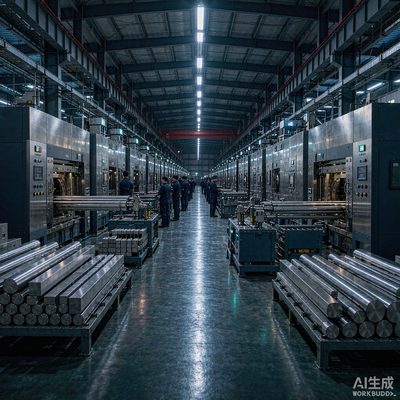
Batch-to-batch consistency is what separates a reliable blank supplier from a commodity seller. At YATECH MATERIALS, we control the full production chain — from tungsten powder through spray drying, pressing, sinter-HIP and precision grinding — and supply carbide insert blanks in standard ISO 1832 shapes and custom geometries, with pressed holes, preformed radii and both sintered and ground surface conditions. Our engineers also help tool manufacturers match grades to their workpiece materials, cutting regimes and coating systems.
If you are launching a new insert family, requalifying a blank source, or troubleshooting edge performance on a coated grade, contattare il nostro team tecnico per una raccomandazione e un preventivo di materiali personalizzati.