

Tungsten carbide is specified where abrasion, pressure or heat ends the service life of steel. This page maps eleven industries to the carbide components they actually buy – cutting blanks and rods, nozzles and seal rings, saw tips, rolls, dies and precision wear parts. Each section links to the relevant product family, with typical grade properties and tolerances rather than published prices. If you are selecting a grade for a new application, start with the industry below and send our team your drawing and operating conditions.
Cutting & Machining
Four industries where the carbide edge does the work. In each of them the failure mode is loss of the cutting edge, and the grade choice trades hardness against edge toughness.
Tool Manufacturing
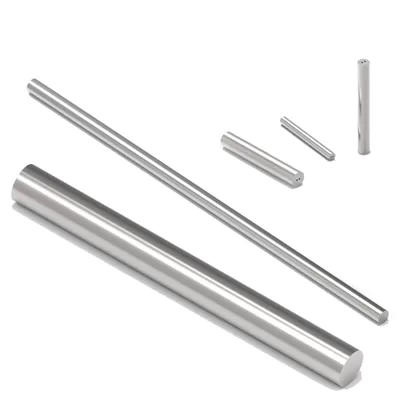
Cutting edges fail in three ways: abrasive flank wear, chipping on interrupted cuts, and thermal cracking at high surface speed. YATECH supplies carbide rods and blanks from Ø1 to 40 mm in ground and unground condition, cutting tool insert blanks and carbide tool blanks pressed close to finished geometry. Submicron grades around 90–92 HRA are typical for finishing and hard milling; tougher 88–89 HRA grades suit roughing. Typical values only – grade, edge preparation and coating are confirmed against your workpiece and duty cycle.
Medical
Instrument edges roll or dull after repeated sterilisation, and punch faces wear out of tolerance. YATECH supplies precision carbide parts for scalpel and biopsy punch blades, burrs, forceps inserts and instrument tips, with tungsten carbide blanks as the base for in-house grinding. Ultra-fine grain grades in the 90–92 HRA range with mirror-ground surfaces (Ra 0.05 µm or finer) and tolerances to ±0.002 mm on critical features are typical. We supply to your drawing; no medical-device approval is implied.
Wood Processing
Woodworking edges wear from the mineral and adhesive content of MDF, plywood and engineered board, and chip when a cutter meets knots or staples. YATECH supplies carbide saw tips, circular saw disc blanks and carbide strips for knives, cutter heads and wear guides. Grades around 89–91 HRA hold an edge in abrasive board; 88 HRA with higher toughness is typical for softwood and recycled timber. Tip geometry and blank flatness are agreed with your saw body so brazing and tensioning stay predictable.
Aerospace
Aerospace machining drives tools into titanium, nickel superalloys and CFRP, where heat and abrasion destroy an edge in a fraction of the usual tool life; fixtures and gauges must hold dimension over long cycles. YATECH supplies precision carbide parts and carbide tool blanks for cutting tools, fixtures, gauges and tooling components. Submicron grades of 90–92 HRA with tight grinding tolerances are typical for superalloy work. We supply tooling and wear components to drawing; we do not manufacture engine or airframe parts.
Wear & Flow Control
Here abrasive media, pressure and corrosion attack surfaces rather than edges. Parts are usually lapped, polished or ground to control leakage, erosion and product contact.
Oil & Gas
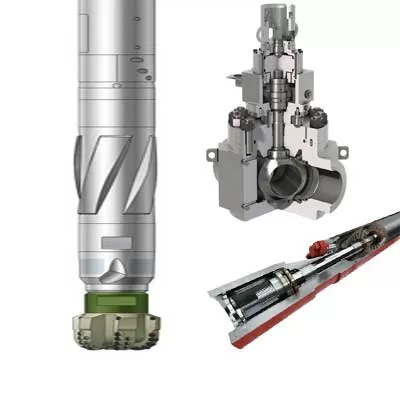
Downhole and surface flow control parts fail from abrasive slurry erosion, high differential pressure and corrosive production fluids – often in combination. YATECH supplies oil and gas carbide components, tungsten carbide nozzles and wear parts for choke trim, valve seats, seal rings, plungers and bushings. Cobalt content of 6–12% at 88–90 HRA is typical where erosion resistance dominates; nickel-based binders are specified when produced water is corrosive. Media, pressure and temperature are confirmed before a grade is released.
Food & Beverage Processing
Food processing wear parts face abrasive product slurry, caustic and acidic cleaning cycles, and repeated washdown. YATECH supplies tungsten carbide nozzles, plungers and stepped cylinders and precision parts for filling, homogenising, cutting and conveying equipment. Corrosion-resistant grades with low or nickel-based binder are typical where cleaning chemicals attack cobalt; surfaces are ground to Ra 0.4 µm or finer and supplied free of grinding residue. Material declarations are issued with the quotation on request.
Plastic Manufacturing & Processing
Extruder screws, liners and pelletiser knives wear from glass- and mineral-filled compounds, and slitting edges dull on abrasive film and foil. YATECH supplies tungsten carbide slitter blades and carbide parts for extruders, including screw flights, liners and die inserts. High-hardness grades of 90–92 HRA resist filled compounds; 88–89 HRA grades are typical where thermal cycling or shock loading is present. Bore, flank and edge radii follow your drawing so replacement parts fit existing barrels without re-machining.
Pump Manufacturers & Operators
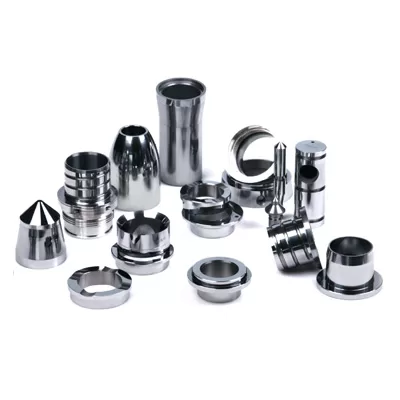
Pump wear shows up as falling head, rising vibration and leakage at the seal face; the usual cause is abrasive solids or short dry running. YATECH supplies plungers and stepped cylinders, tungsten carbide wear parts and carbide nozzles for slurry, centrifugal, plunger and metering pumps – shaft sleeves, seal rings, valve seats and throat bushings. Grades of 88–90 HRA with 6–12% cobalt are typical, with seal faces lapped to sub-micron flatness. Solids content, particle size and pump speed set the grade and clearance we propose.
Forming & Processing
Where carbide shapes metal, board or rock under cyclic load. Impact toughness and thermal crack resistance matter as much as hardness, so these sections read differently from the cutting group.
Steel Production
Mill rolls fail by thermal fatigue cracking at the roll surface, by abrasive hot wear, and by spalling when the roll is overloaded. YATECH supplies tungsten carbide rolls, guides and carbide strips for hot and cold rolling, wire flattening and straightening lines. Coarse-grain grades with 10–15% cobalt at 85–88 HRA are typical where thermal crack resistance matters more than peak hardness; roll bodies are ground and polished to your profile. Roll diameter, coolant practice and load per pass are confirmed before selection.
Automotive Tooling
High-speed stamping dies fail when punch edges chip under shock loading, or when the die face wears and burr height drifts out of tolerance. YATECH supplies tungsten carbide dies, progressive stamping die inserts and fastener die blanks for punching, trimming, cold heading and forming. Fine-grain grades of 89–91 HRA are typical for thin sheet at high stroke rates; tougher grades are used where strip thickness or mis-hit risk is high. Clearances and fits follow your die design.
Earthworks
Ground-engaging tools fail when the carbide tip fractures on rock, or when the body wears back and the tip loses support. YATECH supplies carbide mining tools – conical picks, cutter teeth and wear buttons – and tungsten carbide jaw plates for crushers. Toughness matters more than peak hardness here: 87–89 HRA with 8–13% cobalt is typical for impact-heavy ground, harder grades suit abrasive but broken rock. Shank dimensions and tip protrusion are matched to your tool holder.
Industry to component to product family
Quick reference for the eleven industries above. Grade and tolerance are confirmed per drawing; the properties quoted are typical values, not a specification for a specific part.
| Industry | Typical carbide components | Product family |
|---|---|---|
| IndustryTool Manufacturing | Typical carbide componentsRods, tool blanks, insert blanks | Product familyCarbide rods |
| IndustryOil & Gas | Typical carbide componentsChoke trim, valve seats, nozzles, bushings | Product familyOil & gas components |
| IndustryMedical | Typical carbide componentsSurgical blade blanks, burrs, instrument tips | Product familyPrecision parts |
| IndustryWood Processing | Typical carbide componentsSaw tips, disc blanks, cutter knives | Product familySaw tips |
| IndustrySteel Production | Typical carbide componentsMill rolls, guides, straightening strips | Product familyCarbide rolls |
| IndustryFood & Beverage | Typical carbide componentsNozzles, plungers, filler and cutter parts | Product familyCarbide nozzles |
| IndustryPlastic Manufacturing | Typical carbide componentsSlitter blades, screw flights, die inserts | Product familySlitter blades |
| IndustryPumps | Typical carbide componentsShaft sleeves, seal rings, plungers, seats | Product familyWear parts |
| IndustryAutomotive Tooling | Typical carbide componentsPunches, die inserts, cold heading nibs | Product familyCarbide dies |
| IndustryEarthworks | Typical carbide componentsConical picks, wear buttons, jaw plates | Product familyMining tools |
| IndustryAerospace | Typical carbide componentsTool blanks, fixture and gauge components | Product familyTool blanks |
Frequently asked questions
Which carbide grade suits an abrasive slurry?
Fine-grain grades with 6–12% cobalt, in the 88–90 HRA range, are the usual starting point for slurry erosion: hard enough to resist abrasion, tough enough not to chip on entrained particles. Where the fluid is also corrosive, a nickel-based binder is specified instead of cobalt. Particle size, velocity and solids loading decide the final grade, so these figures are typical values rather than a recommendation for a specific duty.
Can you supply components to my drawing?
Yes. Send a PDF, DWG or STEP drawing, or a worn sample if no drawing exists. We quote against your geometry, grade and tolerance, and return a drawing marked with the features we will hold and any point that needs your confirmation. Standard shapes are also available for trials before a custom tool is committed.
What tolerances are typical?
As-sintered blanks are typically held within ±0.1–0.2 mm or about ±0.5% of dimension, whichever is greater. Ground features are typically ±0.002–0.01 mm depending on size and geometry, with surface finish from Ra 0.4 µm down to Ra 0.05 µm for lapped seal faces. The achievable class is confirmed on your drawing before production.
How does carbide compare with hardened steel in wear service?
In abrasive service a carbide wear part usually outlasts a hardened steel part several times over under the same duty, but the ratio depends on the wear mechanism. Carbide wins clearly on abrasive sliding wear and erosion; on heavy impact, steel deforms while carbide may crack, so grade and support design matter more than hardness alone. We size the grade against the failure mode rather than quoting a single life multiplier.
Do you supply samples before volume production?
Yes. Sample quantities of standard items and trial batches of custom parts are available so you can verify geometry, grade and finish on your own line. Trial orders are quoted separately and can be referenced in the production quotation.
Do you publish prices?
No. Carbide parts are quoted per drawing, grade and quantity, because a single dimension or tolerance class can change the production route. We publish typical material properties and tolerances instead, and send a written quotation once the drawing and quantity are known.
Cemented carbide demand is concentrated in cutting tools, wear parts and tooling. China produced roughly 64,000 tonnes of cemented carbide products in 2025, according to China Tungsten Industry Association data cited in China Tungsten High-Tech’s 2025 annual report. We do not publish market rankings.